
Body-worn camera footage has become a central feature of domestic abuse investigations in England and Wales. Police officers are now routinely equipped with body-worn video cameras, which are often activated when they attend reports of domestic incidents.
For individuals accused of domestic abuse, this footage can play a significant role in shaping how a case is investigated and whether it proceeds to charge.
While body-worn camera evidence is often presented as objective and reliable, its use raises critical legal issues. Understanding how this evidence is gathered, interpreted, and challenged is essential for anyone facing domestic abuse allegations.
What Is Body-Worn Camera Evidence?
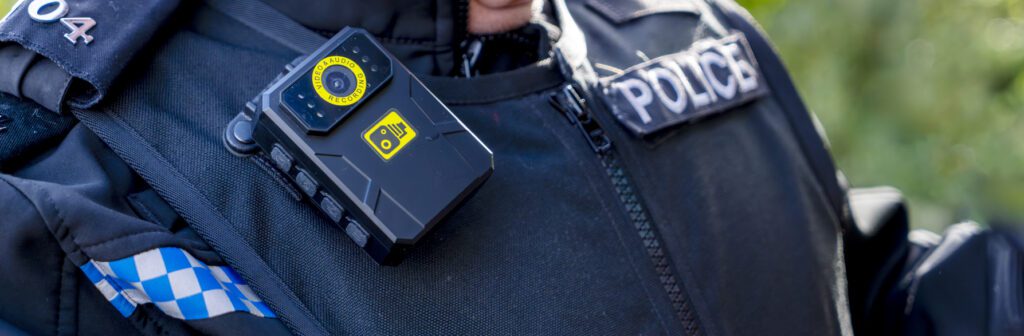
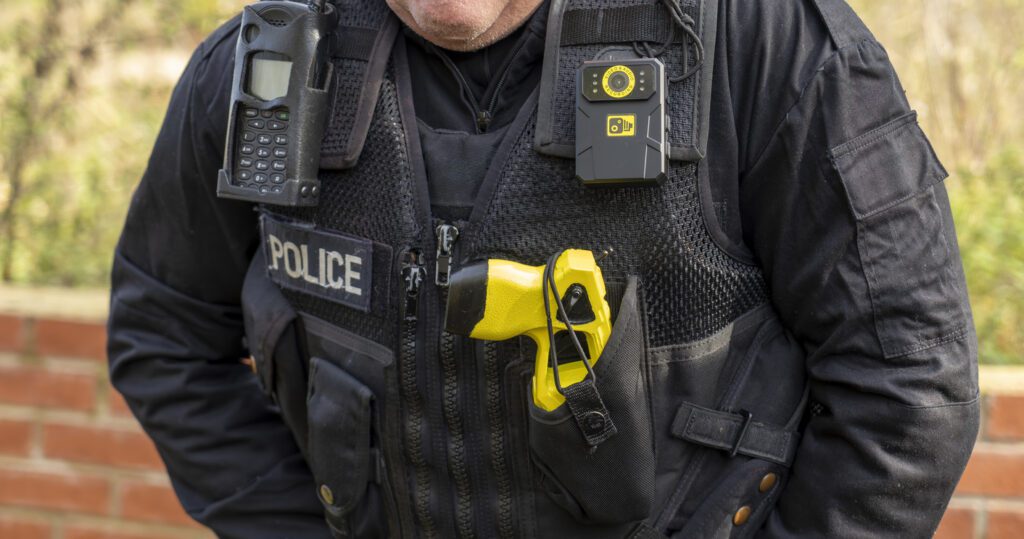
Body-worn cameras are small recording devices worn by police officers, usually attached to their uniforms. When activated, they record video and audio of interactions between officers and members of the public.
In domestic abuse cases, footage commonly captures the immediate aftermath of an alleged incident, including the condition of the parties involved, their demeanour, and any statements made at the scene.
Police guidance encourages officers to activate body-worn cameras when attending domestic incidents, particularly where there is a risk of confrontation or safeguarding concerns.
As a result, body-worn footage has become a routine part of the prosecution evidence in many cases.
Why Body-Worn Camera Footage Is Considered Important
From a policing perspective, body-worn camera evidence is seen as a way to preserve an accurate record of events and reduce reliance on later recollections. In domestic abuse cases, it is often relied upon to capture a complainant’s initial account, emotional state, and any visible injuries.
Prosecutors may place significant weight on this footage, particularly where a complainant later withdraws support for the prosecution.
Under the Criminal Justice Act 2003, previous statements can, in certain circumstances, be admitted as evidence even if the complainant does not give live testimony.
The Legal Limitations of Body-Worn Camera Evidence
Despite its apparent objectivity, body-worn camera footage is not infallible. Cameras record only a limited window of time and perspective. They do not capture events that occurred before officers arrived, nor do they provide full context to what may be a complex and emotionally charged situation.
Footage may reflect heightened emotions, distress, or shock immediately after an incident, but it does not establish the cause of those emotions.
From a defence perspective, body-worn camera evidence mustn’t be treated as conclusive proof of guilt without scrutiny.
Statements Made at the Scene
One of the most significant aspects of body-worn camera evidence is the recording of spontaneous statements made by the parties involved.
These statements are often given in stressful circumstances, sometimes late at night or following an argument.
A person accused of domestic abuse may make remarks in an attempt to calm the situation, explain events, or respond to police questioning without legal advice. Such statements can later be relied upon by the prosecution, even where they were not intended as formal admissions.
This highlights the importance of understanding your right to legal advice and your right to remain silent. At Eventum Legal, we regularly advise clients on the implications of body-worn camera footage and how statements made at the scene may be interpreted and understood.
The Complainant’s Presentation on Camera
Prosecutors often rely on body-worn camera footage to demonstrate the complainant’s emotional state, such as distress or fear. While this can be relevant, it is not determinative of what occurred. Emotional presentation does not automatically establish criminal behaviour by the accused.
Domestic disputes are often complex, and emotions can arise for a variety of reasons.
Defence solicitors will examine whether the footage presents a complete and balanced picture or whether alternative explanations have been overlooked.
Body-Worn Camera Evidence and Arrest Decisions
In many domestic abuse cases, the decision to arrest is influenced heavily by what officers observe on body-worn cameras.
This may include the demeanour of the parties, the condition of the property, or statements made at the scene.
However, an arrest is not a finding of guilt. It is a procedural step taken when officers believe it is necessary and proportionate to do so. Body-worn camera footage that leads to an arrest must still be critically assessed as part of the broader investigation.
Disclosure and Review of Footage
Under the Criminal Procedure and Investigations Act 1996, the prosecution has a duty to disclose material that may undermine the prosecution’s case or assist the defence. This includes body-worn camera footage in its entirety, not just selected clips.
In practice, defence solicitors often need to ensure that complete footage is obtained and reviewed carefully. Selective reliance on certain moments can create a misleading impression.
At Eventum Legal, we analyse body-worn camera evidence in detail to identify inconsistencies, omissions, and contextual issues that may affect its reliability.
Body-Worn Cameras in Cases Without Complainant Support
In some cases, a complainant may later retract their allegation or decline to support a prosecution. The CPS may still proceed if they believe there is sufficient evidence, including body-worn camera footage.
This approach aligns with CPS guidance on evidence-led prosecutions, but it also raises concerns about fairness.
Defence representation is essential in these cases to challenge whether the evidential threshold is truly met and whether a prosecution remains appropriate.
The Importance of Context and Alternative Evidence
Body-worn camera footage should never be viewed in isolation. Messages, call logs, previous interactions, and third-party evidence may all be relevant to understanding what occurred.
A skilled defence solicitor will place body-worn camera evidence within its proper context, ensuring that assumptions are not made based on incomplete information.
This is particularly important where allegations arise from relationship breakdowns or highly emotional disputes.
Challenging the Weight Given to Body-Worn Camera Evidence
The court must assess body-worn camera footage like any other evidence, considering its reliability, relevance, and limitations. It is open to the defence to challenge how the footage is interpreted and the weight that should be attached to it.
Practical challenges often focus on what the footage does not show, the circumstances in which statements were made, and whether the prosecution’s interpretation is fair and balanced.
How Eventum Legal Supports Clients in These Cases
Eventum Legal specialises in defending individuals accused of domestic abuse. We provide early advice, representation during police interviews, and strategic pre-charge engagement to ensure that evidence, including body-worn camera footage, is assessed properly.
Our approach is proactive and detail-focused. We work to ensure that investigations remain fair, that disclosure obligations are met, and that our clients’ rights are protected at every stage.
Speak To Eventum Legal Today For Defence Services
Body-worn camera evidence plays an increasingly prominent role in domestic abuse cases, but it is not definitive proof of guilt. Like all evidence, it must be analysed carefully and in context.
For anyone accused of domestic abuse, understanding how body-worn camera footage may be used is essential. Early legal advice and specialist representation can make a critical difference in ensuring that this evidence is interpreted fairly and in accordance with the law.
Eventum Legal is committed to guiding clients through this process with clarity, discretion, and expertise.