A Sexual Harm Prevention Order (SHPO) is a court order designed to protect the public by restricting the behaviour of individuals who have been convicted of certain sexual offences.
These orders can have a significant impact on an offender’s daily life, limiting where they can go, who they can contact and how they use technology. They can also impose ongoing notification requirements, making it essential to understand both your legal obligations and your rights.
If you have been notified that the court is considering imposing a Sexual Harm Prevention Order, or you wish to challenge the terms of an existing order, obtaining specialist legal advice at the earliest opportunity is crucial.
At Eventum Legal, our experienced criminal defence solicitors advise clients throughout England and Wales on SHPO applications, appeals, variations and allegations of breach.
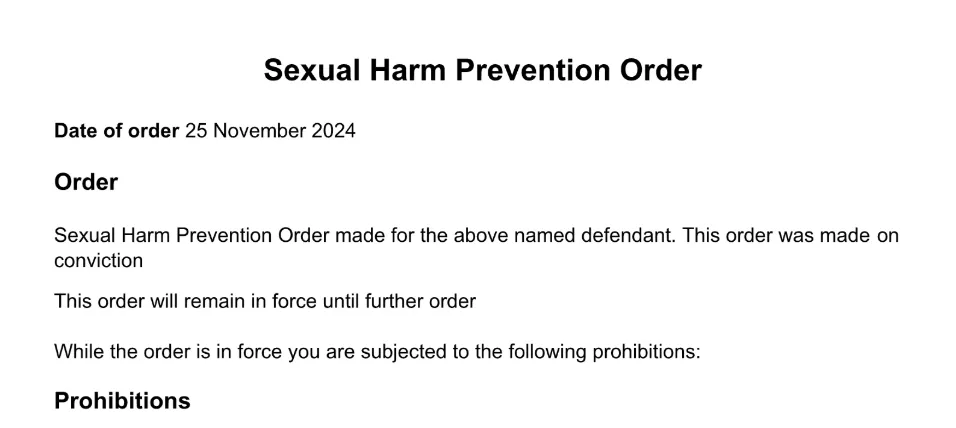
A Sexual Harm Prevention Order (SHPO) is a preventative order made under the Sexual Offences Act 2003. It replaced the former Sexual Offences Prevention Orders and is intended to reduce the risk of future offending by imposing restrictions that the court considers necessary to prevent sexual harm.
Unlike a Sexual Risk Order, which can be made without a conviction, a Sexual Harm Prevention Order is generally imposed following a conviction for a qualifying offence listed in the relevant Schedule to the Sexual Offences Act 2003.
The order may be made at the time of sentencing or, in some circumstances, at a later date if the police believe further restrictions are necessary.
The purpose of a Harm Prevention Order SHPO is not to punish an offender again for past offending, but to manage the future risk they may present. Before imposing an order, the court must be satisfied that the restrictions are necessary to protect the public from sexual harm and that the conditions are both necessary and proportionate.

A Sexual Harm Prevention Order is usually made against an offender who has been convicted of a qualifying sexual offence. The relevant offence must be one that appears within the statutory Schedule contained in the legislation.
When deciding whether to impose a prevention order, the court will consider the nature of the offending, any pre-sentence report, the offender’s previous behaviour, the risk presented, and whether additional restrictions are required to protect children or vulnerable adults.
Although the conviction itself is a significant key factor, the court will assess each individual case on its own merits. The order must be tailored to the circumstances rather than imposing unnecessary or overly broad restrictions.
Every Sexual Harm Prevention Order is different. The conditions imposed will depend on the circumstances of the offence, the offender’s history and the level of ongoing risk identified by the court.
A SHPO can include restrictions on internet use, social media accounts, contact with specific children, specific family members, or other individuals considered at risk. The order may also include foreign travel restrictions, preventing an offender from travelling abroad without notifying the authorities or obtaining permission.
In some cases, the court may require the installation of computer monitoring software on devices that can access the internet.
The legislation also allows the court to impose positive obligations, although these are less common than prohibitions. Whatever restrictions are imposed, they must be carefully tailored to the individual and should not amount to unnecessary blanket prohibitions. The aim is to protect the public while ensuring that the order interferes with the individual’s rights only to the extent justified.

A Sexual Harm Prevention Order must remain in force for a fixed period of at least five years.
However, depending on the seriousness of the case and the level of ongoing risk, the court may decide that the order should continue indefinitely or until further order.
Where an order has been imposed indefinitely, it does not automatically last for life. Instead, the offender will remain subject to the order unless and until it is successfully varied or discharged by the court. In most cases, an application to discharge the order cannot be made until at least five years have passed unless both the offender and the police agree otherwise.
The court also has the power to vary an order where circumstances have changed. This may involve adding new restrictions, removing conditions that are no longer necessary, or amending the order to ensure it continues to protect the public in a proportionate way.
Most individuals made subject to a Sexual Harm Prevention Order will also be required to comply with statutory notification requirements. These obligations usually require an offender to notify the police of changes to their address, name and other personal details within specified time limits.
Depending on the circumstances, notification obligations may also apply when travelling abroad or using new online identities. These notification requirements allow the police to ensure compliance with the order and that it can be policed effectively.
Failure to comply with these obligations can itself amount to a criminal offence, even if none of the substantive restrictions in the order has been breached.

Breaching a Sexual Harm Prevention Order is a serious criminal offence. An offender who fails to comply with any prohibition or requirement may be arrested, prosecuted, and, if found guilty, sentenced by the court.
The maximum penalty for breaching an SHPO is five years’ imprisonment. A conviction for breach will result in a further criminal record and may lead the court to impose additional or more restrictive conditions. The fact that an order has been breached may also influence future sentencing decisions if the offender is later convicted of another offence.
Because the consequences are so severe, anyone accused of breaching a SHPO should seek immediate legal advice.
Although both orders are intended to prevent sexual harm, there are important legal differences between a Sexual Harm Prevention Order and a Sexual Risk Order.
A SHPO is generally imposed following a conviction for a qualifying sexual offence. By contrast, a Sexual Risk Order can be made without a conviction where the police or the National Crime Agency believe an individual poses a future risk of sexual harm.
Both orders can impose restrictions on internet access, foreign travel, contact with children or vulnerable adults, and other aspects of an individual’s behaviour. However, the legal tests for obtaining each order differ, and specialist legal advice is essential in either case.
In some circumstances, it is possible to appeal a Sexual Harm Prevention Order or apply for it to be varied or discharged.
An appeal may be appropriate where the court has imposed conditions that are not justified by the evidence or where the restrictions are not proportionate to the level of risk presented. Similarly, an offender may seek to vary the order if their circumstances have changed or if certain prohibitions are no longer necessary.
The court will consider each application carefully, balancing the need to protect the public against the individual’s rights. Legal advice is essential to determine whether an appeal or variation application has realistic prospects of success.
A Sexual Harm Prevention Order can have lasting consequences long after a criminal case has concluded. Restrictions on employment, foreign travel, internet use and contact with others can significantly affect both your personal and professional life. Allegations of breach can also result in a further criminal record and the possibility of five years’ imprisonment.
At Eventum Legal, our experienced criminal defence lawyers provide specialist advice on every aspect of Sexual Harm Prevention Orders.
Whether you are facing the possibility of an order being imposed during sentencing, wish to appeal an existing SHPO or need representation following an alleged breach, we will carefully assess the evidence, explain your legal options and represent you throughout the proceedings.
We understand that every case is different. Our objective is to ensure that any Harm Prevention Order imposed is a, necessary and proportionate while protecting your rights at every stage of the process.
No. The SHPO itself is not a separate conviction, but it is usually imposed following a conviction for a qualifying sexual offence. Breaching the order is a separate criminal offence.
An SHPO must last for a minimum fixed period of five years, although the court may make it last indefinitely where appropriate.
Yes. In certain circumstances, it is possible to apply to vary or discharge the order, although applications are generally only considered after the order has been in force for five years unless exceptional circumstances apply.
A Sexual Harm Prevention Order generally follows a conviction for a qualifying sexual offence, whereas a Sexual Risk Order can be made without a conviction where the authorities believe restrictions are necessary to manage a future risk of sexual harm.
Breaching a SHPO is a criminal offence. If convicted, the court can impose a sentence of up to five years imprisonment, together with any other penalty it considers appropriate.